
A Ferrari F40, a Friday Ritual, and the Making of SEVEN
Before it was a showroom, it was a boy returning every Friday to look at one car. A decade later, SEVEN Car Lounge has become one of the places where Saudi Arabia's relationship with the automobile moved from speed to stewardship.
The story
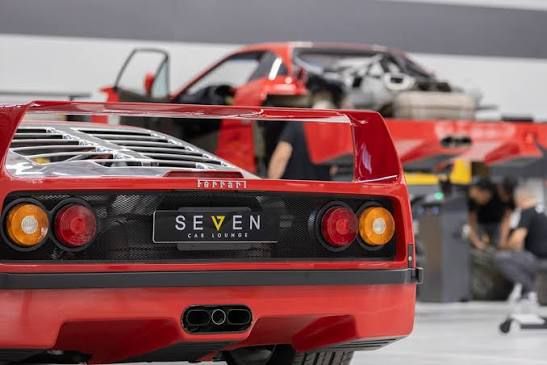
There is a version of this story that begins with price. It would list the hypercars, count the limited-production numbers, and leave the reader with the impression that luxury is simply a matter of rarity. That version misses what makes SEVEN Car Lounge interesting. The more revealing beginning is a showroom on King Fahd Road, and a twelve-year-old who kept coming back to it.
According to a 2015 profile in Destination KSA, Talal, the founder, was taken there by his father with his brother Adel, and saw a Ferrari F40 for the first time. He returned every Friday. In 2008, he bought one of his own. He has described it as his favourite car. The detail matters because it explains the business that followed. SEVEN was not built by someone who discovered that supercars were profitable. It was built by someone who had spent years learning how to look at one.
From Dubai to Riyadh
The route to the showroom ran through the Emirates. After graduating, Talal borrowed less than SR 200,000 from family and moved to Dubai, which was then the region's centre of gravity for exotic cars. He started small, trading between Saudi Arabia and the UAE. The lesson he brought home was not about inventory. It was about a gap. Saudi collectors, by the founders' own account, were struggling to find the cars they actually wanted, and were travelling or importing to get them.
SEVEN Car Lounge opened in Riyadh in 2014, with Adel as managing director and later chief executive. The name comes from the seven services the lounge was designed around, from sourcing factory-new and hard-to-find cars to restoration and vintage vehicles with documented histories. The structure was the point. A collector did not need a salesroom. A collector needed a single, trusted address for acquisition, care, provenance, and eventually, resale.
A showroom that behaves like a private collection
In its early years, the floor read less like a dealership and more like a curated hall. Contemporary accounts describe two Pagani Huayras, one finished in blue carbon fibre, alongside a pair of Ferrari LaFerraris, a McLaren P1, several Porsche 918 Spyders, and a 1936 Maybach SW38, reportedly one of three left in the world. The juxtaposition is telling. Hypercars from the 2010s sat beside a pre-war Maybach, an argument that the automobile could be read as a design object with a lineage, not just a performance figure.
Behind the floor sat the most deliberate decision of all. A members-only lounge, entered by biometric recognition, capped at 77 members. Entry was reported to require at least $2 million in purchases from the house, and what Adel called a shared passion among like-minded clients. One can read this as exclusivity for its own sake. A more generous reading is that SEVEN understood something early about collecting in the Gulf. Collectors want a room where the conversation is as rare as the cars.
The ethic of use
What separates a collector from an owner is often a philosophy, and Talal's is plain. He has advised that collecting can be a sound investment for those who research carefully and inspect with an authorised consultant, and that protecting a car from Riyadh's climate requires a proper garage. But he has never argued for sealing cars away. His advice to owners: "Drive it. Enjoy the ride."
That position is quietly significant in a market where rare cars can easily become static assets. It places SEVEN closer to the European tradition of the concours and the rally than to the logic of the vault.
Bringing the concours home
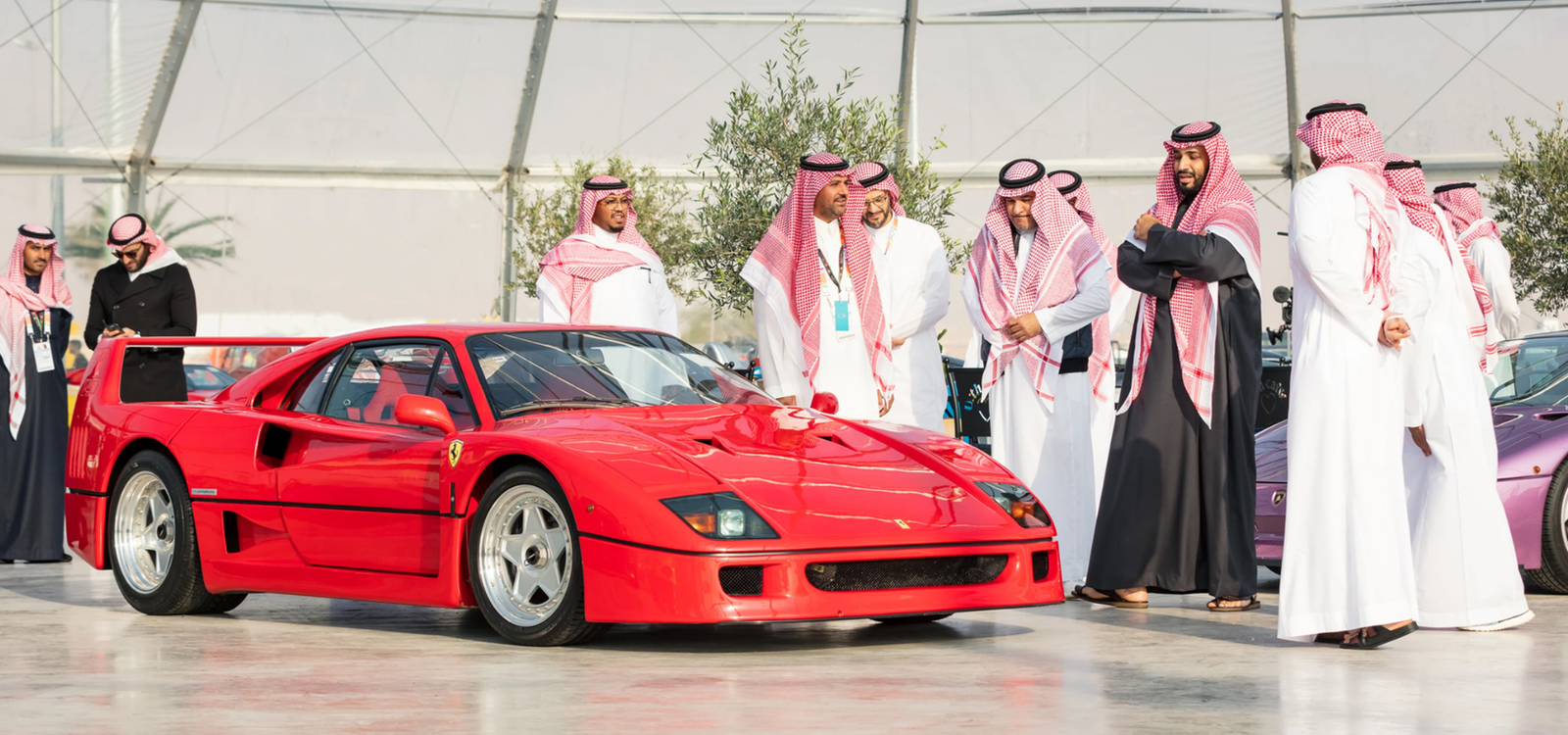
That tradition is where SEVEN took its ambition next. The SEVEN Concours was part of the inaugural Riyadh Car Show in November 2019, held under the Saudi Season programme. By March 2024, the SEVEN Concours ran for a week within Riyadh Season, presented as the largest gathering of sports and exotic cars in the Middle East, with a manufacturer zone, an auction, a viewing track, and a VIP lounge. BAC chose the event to debut the new Mono in the region.
The shift in scale is worth noting. A members' room for 77 became a public stage for thousands. In effect, SEVEN moved from serving a collecting culture to helping build one, giving Riyadh a place in the international calendar that had long belonged to Pebble Beach, Villa d'Este, and Goodwood.
Craftsmanship over horsepower
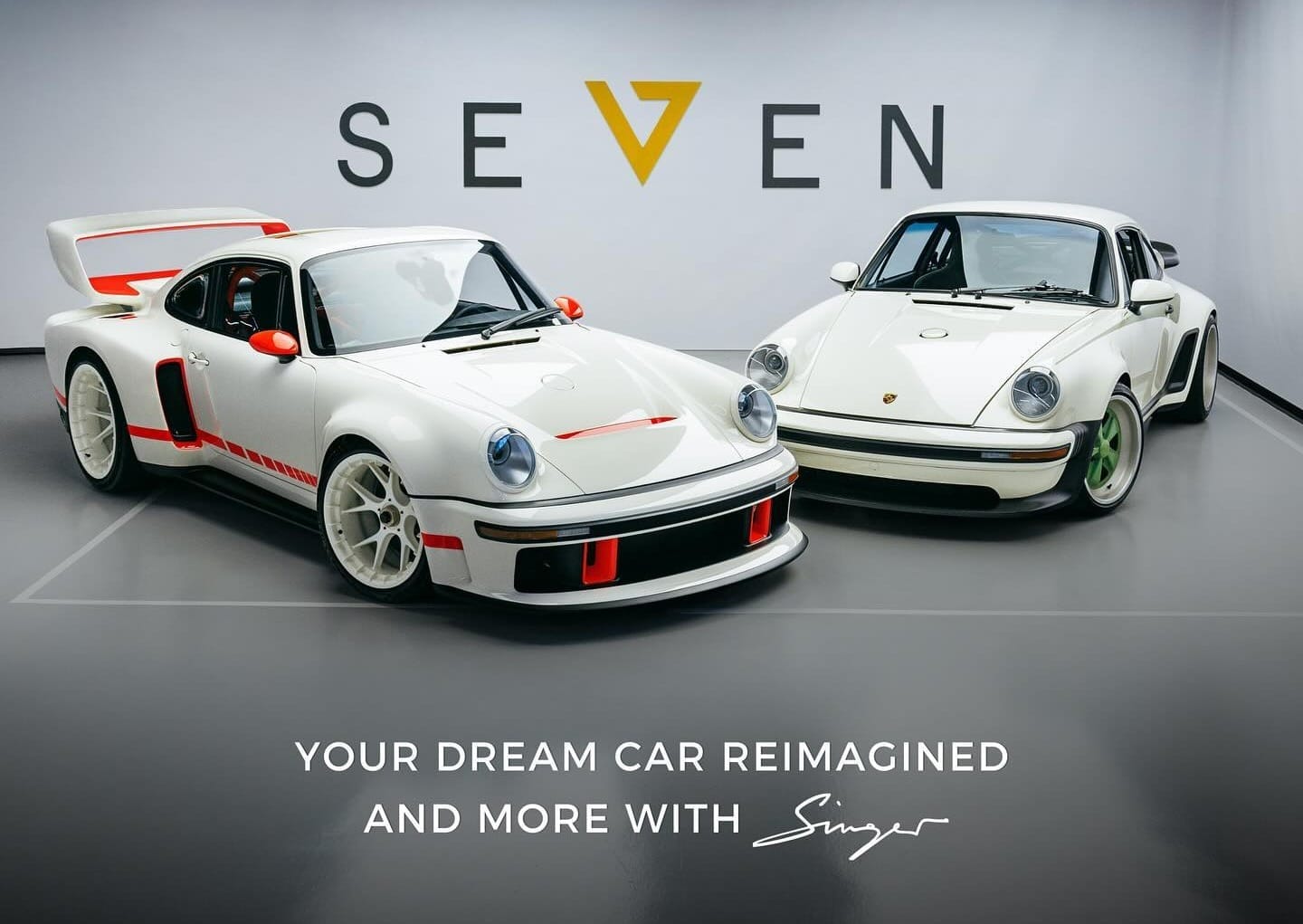
The most recent chapter is perhaps the most revealing about where Saudi taste is heading. SEVEN became the official partner for Singer, the California house known for its restorations of air-cooled Porsche 911s, covering clients in Saudi Arabia, Bahrain, Kuwait, and Qatar. At the Riyadh launch, two turbocharged 911s restored by Singer were shown in the Kingdom for the first time.
Singer's work is the opposite of a launch-day hypercar. It is slow, commissioned, obsessive about materials and analogue feel. That a Riyadh house chose to represent it says a great deal. The region's most discerning buyers are no longer asking only for the fastest or the newest. They are asking who made it, how, and why it will matter in thirty years.
What remains
SEVEN's story is often told as one of rare machines. It reads better as a story about patience. A boy who studied one car every Friday became a founder who built rooms for people who look at cars the same way. Along the way, the house helped shift the Saudi conversation from acquisition to stewardship, from showroom to concours, and from horsepower to craftsmanship.
Luxury, in this telling, was never the price of the F40. It was the decade of Fridays that taught someone to understand it.
Sources
- Destination KSA, 2015 profile
- duPont Registry: Seven Car Lounge
- Zawya: SEVEN becomes official partner of Singer
- Stuttcars: Singer partners with Seven Car Lounge
- EIN Presswire via Kalkine: SEVEN Concours 2024
- What's On Saudi Arabia: Seven Concours 2024
- BAC: Mono debut at SEVEN Concours
- Talacrest: Riyadh Car Show 2019