
Saudi Arabia Has Fashion Labels. Can It Build Fashion Houses?
The Kingdom has built a fashion week, a fund, and a generation of designers in a few years. A house takes something none of those can supply on schedule.

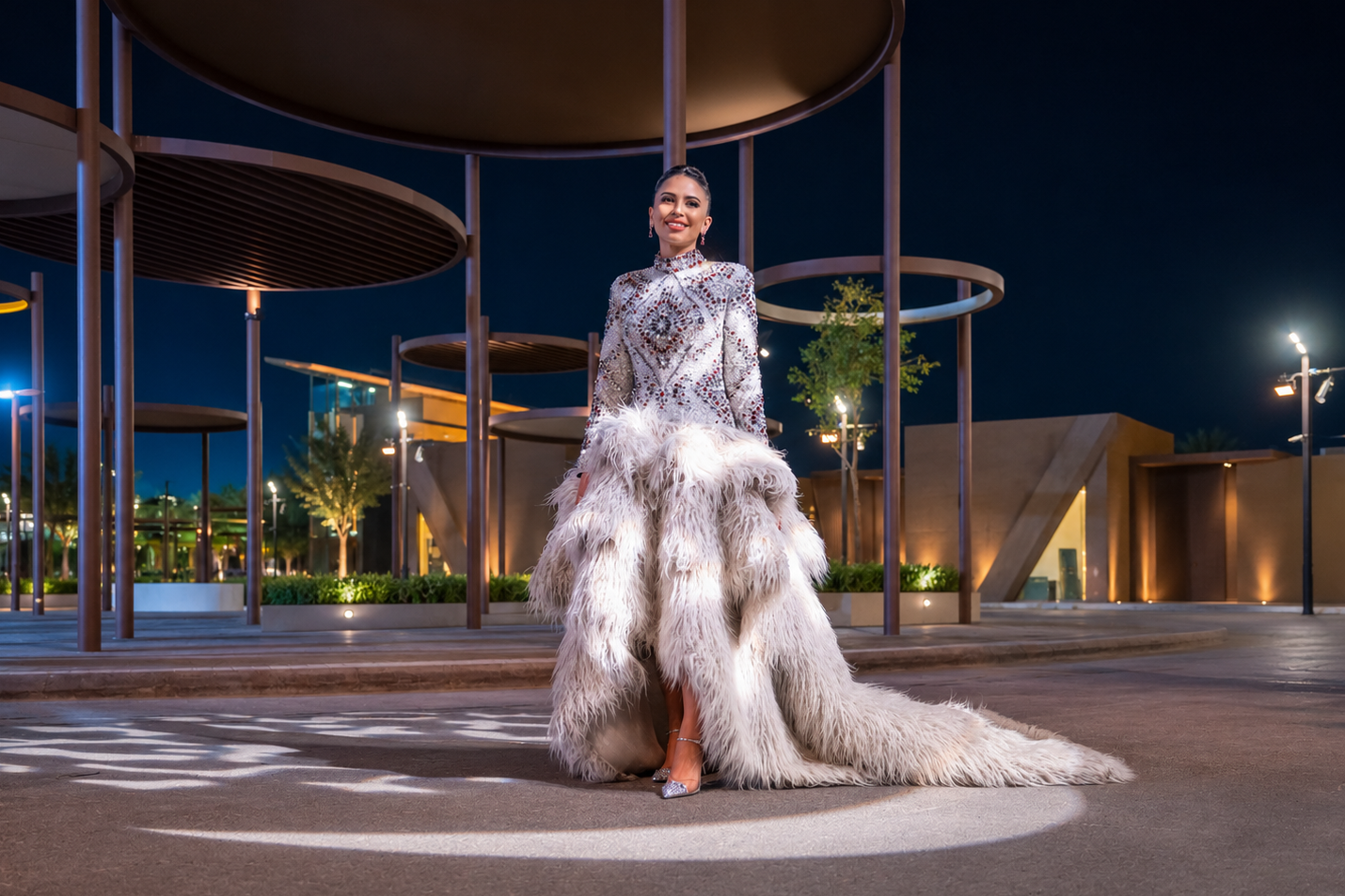
The Kingdom has designers, international recognition, and new investment capital. But building a luxury fashion house requires something harder to acquire: a distinctive product, lasting customer loyalty, and an identity capable of surviving its founder.
On the evening of October 14, 2026, one day before Riyadh Fashion Week was due to begin its fourth edition, organizers announced that the event would not take place. It had been postponed until 2027, with no replacement dates confirmed. The announcement came amid changes to several major events in Saudi Arabia's cultural calendar, although organizers did not publicly establish a connection between those developments and their decision.
For designers who had spent months preparing collections, the postponement removed an important opportunity. Fashion weeks concentrate the attention of buyers, editors, stylists, and potential clients into a few days. For a young label seeking recognition, an appearance on the runway can influence the conversations and commercial relationships that follow for months.
But the absence of a runway raises a more enduring question about Saudi fashion. The country has designers, fashion institutions, international exposure, and increasingly specialized capital. Can it build something more difficult: fashion houses whose identity outlives their founders, whose products command their own prices, and whose desirability travels to Paris, London, and Tokyo without depending on national pride?
What Makes a Fashion House?
The word house is frequently used as a synonym for brand. In luxury fashion, however, it carries a larger ambition.
Louis Vuitton began in 1854 as a trunk maker. Hermès was established in 1837 as a maker of harnesses and saddles. Chanel opened in 1910 with a millinery business. Their origins were different, and so were the paths by which they became international institutions. What they shared was a recognizable point of view expressed through products, supported by commercial discipline and sustained across generations.
None began with the institutional scale it possesses today. Their reputations developed through a combination of product, craftsmanship, design evolution, cultural influence, distribution, and accumulated customer trust.
That history suggests five useful indicators of a fashion house's maturity.
The first is a recognizable signature: a design language that knowledgeable customers can identify without relying on a logo. The second is command of craftsmanship and quality, whether through owned ateliers, specialist suppliers, or enduring manufacturing partnerships. The third is pricing power, demonstrated not simply by high prices but by customers' sustained willingness to pay a premium.
The fourth is commercial independence: the ability to develop durable customer relationships through an appropriate combination of direct sales, wholesale partnerships, and selective distribution. The fifth is continuity: an identity and operating structure capable of surviving changes in creative leadership and, eventually, the departure of a founder.
These are not universal requirements or a formal definition of a maison. Different luxury businesses organize their production and distribution differently. But together, they offer a more demanding way to assess the foundations of an enduring house than runway participation, celebrity visibility, or the number of international stockists.
Applied to Saudi Arabia, they reveal an industry developing quickly, but at different speeds.
The Infrastructure Arrived Quickly
The progress of the past few years is substantial.
According to the Saudi Fashion Commission's Fashion Week Economics research, published at the end of 2025, Riyadh Fashion Week attracted approximately 27,000 visitors and featured more than 100 participating brands across its first three editions. The event created a recurring international platform for designers who, a few years earlier, had considerably fewer opportunities to present their work within the Kingdom.
The Saudi 100 Brands initiative has introduced designers to international audiences, while the Fashion Commission has established programs intended to develop skills, support creative businesses, and strengthen the broader fashion value chain.
Investment has begun to follow that institutional development. In April 2026, the Kingdom's fashion-focused investment fund was relaunched under the name ZYA Fund. The SAR 300 million fund is managed by Merak Capital, with the Cultural Development Fund holding a 40 percent stake. Its investment scope extends beyond design labels to include production, supply chains, e-commerce, accessories, and beauty.
That breadth matters. A fashion industry cannot develop through designers alone. It also needs the less visible businesses that make a collection commercially viable: manufacturers, material specialists, production managers, logistics providers, retailers, and experienced operators.
Still, the announcement of a fund is not the same as demonstrated investment returns. Its significance lies in the institutional capacity it could create and the businesses it may eventually help build.
There is already evidence that Saudi designers can enter highly selective international fashion circles. Mohammed Ashi, founder of Ashi Studio, became the first designer from the Gulf to appear on the official Paris Haute Couture Week calendar in July 2023. His Paris-based atelier continued to present collections on the calendar in 2026.
Such recognition would once have seemed distant for a Saudi designer. It now offers a tangible example of what sustained creative ambition can achieve.
Yet visibility, even at the highest level, remains only part of the story.
The Designers Building Different Foundations
Saudi fashion is not developing along a single creative or commercial model. Looking closely at individual labels reveals different approaches to the question of what a house could become.
Abadia, founded by Shahd AlShehail with Naeema AlShehail, approaches contemporary luxury through craftsmanship, cultural continuity, and an understated design language. Traditional Saudi textile techniques inform collections that seek to translate regional knowledge into clothing for a modern international wardrobe.
Its expansion into international retail channels, including Net-a-Porter and Selfridges, demonstrates access to consumers beyond its domestic market. More importantly, the brand's emphasis on craftsmanship raises a question central to long-term luxury development: can a recognizable design philosophy become the foundation of sustained demand?
International distribution is meaningful, but it does not independently establish profitability or repeat purchasing. Those measures would reveal more about the durability of the business.
HONAYDA, established by Honayda Serafi in 2016, offers another route. Its collections are built around expressive femininity and stories of influential women, giving the brand a recognizable narrative identity. Its presence in international retail, including Harrods and Saks Fifth Avenue, demonstrates an effort to turn that identity into a business serving customers outside Saudi Arabia.
The question for HONAYDA is not whether its work can reach international audiences; it already has. It is how its creative identity, customer relationships, and commercial organization will evolve over successive collections.
Atelier Hekayat, founded by sisters Alia and Abeer Oraif, takes a more theatrical approach. Its designs emphasize volume, ornament, artistic expression, and storytelling. Where some emerging luxury brands pursue restraint, Atelier Hekayat works with a more expressive visual language.
That distinction is important. Saudi fashion does not need a single recognizable aesthetic. The foundation of a house is not necessarily adherence to minimalism, heritage motifs, or an established European understanding of elegance. It is the consistent development of a distinctive creative world.
These brands are not interchangeable examples of Saudi success. Their products, customers, design philosophies, and commercial models differ. Nor is public information sufficient to determine which has achieved the financial resilience or organizational continuity associated with an established international house.
What they demonstrate is that the beginnings of distinct Saudi luxury identities already exist. Whether those identities can become enduring institutions is a separate question.
The Challenge Beneath the Design
Craftsmanship is often discussed as a cultural advantage. In practice, it is also an operational challenge.
A collection can be designed in Riyadh and manufactured in Italy, Portugal, or elsewhere without sacrificing quality or luxury credibility. International production is not inherently a weakness. What matters is the depth of the brand's knowledge, the consistency of its standards, and the control it maintains over the outcome.
Hermès is closely associated with its specialist workshops. Chanel has invested in preserving artisanal expertise through its relationships with and acquisitions of specialist ateliers. But the broader lesson is not that every fashion house must manufacture everything itself. It is that the knowledge, quality, and capabilities behind a product must be difficult to reproduce.
For Saudi brands, building those capabilities presents an opportunity and a set of unresolved questions.
The Fashion Commission's State of Fashion research has identified the development of domestic production and the wider fashion value chain as important priorities. In 2024, the Commission opened The Lab in Misk City to support local product development.
Initiatives such as these indicate that manufacturing capability is being addressed, but they do not establish how many Saudi luxury brands have access to specialized production at the quality, scale, and consistency they require.
That remains an area where more transparent industry data is needed.
Traditional Saudi craftsmanship introduces another possibility. Sadu weaving, intricate embroidery, metalwork, jewelry-making, and other regional disciplines contain techniques and design knowledge developed over generations.
The Commission's Saudi Heritage Revival program has sought to connect that knowledge with contemporary designers. Its third edition, concluded in September 2026 in collaboration with Swarovski and Art of Heritage, explored the reinterpretation of traditional crafts through jewelry and garment design.
The opportunity is not simply to reproduce heritage as ornament. It is to translate inherited knowledge into contemporary products with enduring appeal.
A textile technique might influence the structure of a garment rather than appear as a decorative reference. A traditional method of working metal might inform a new category of accessories. Familiar regional forms could become the starting point for a design language that feels contemporary without becoming anonymous.
The strongest expression of Saudi luxury may emerge not from displaying cultural heritage most visibly, but from understanding it deeply enough to transform it.
Recognition Is Not the Same as Desire
A Saudi designer can receive international press coverage, dress celebrities, appear at fashion weeks, and secure prestigious retail partnerships. Each achievement has value. None, in isolation, proves that customers will continue buying the product.
This is where the distinction between recognition and desirability becomes important.
Recognition means people know a brand exists. Desirability means they want what it creates, often in preference to available alternatives.
For emerging Saudi houses, the more revealing questions may be commercial rather than ceremonial. Do customers return for a second or third collection? Which products remain desirable after their initial media exposure? Can the brand sustain its prices without relying on promotional activity? Do international buyers reorder because the products sell, rather than because the brand represents an emerging market?
These questions are difficult to answer using publicly available information. Most privately held fashion labels do not disclose detailed revenue, repeat-purchase data, sell-through rates, or customer acquisition costs.
But those are precisely the measures that would help distinguish an internationally visible designer from an increasingly resilient luxury business.
They also challenge a convenient assumption: that global recognition necessarily arrives before commercial maturity.
A brand can establish a loyal private clientele long before it becomes widely known. Conversely, it can attract considerable media attention without achieving a business capable of supporting its creative ambitions over time.
The two forms of success are related, but neither guarantees the other.
Why Independent Criticism Matters
Luxury also develops through the judgment of people who are not invested in celebrating it.
When Ashi Studio made its official Paris couture debut in 2023, a WWD review acknowledged the visual impact and red-carpet potential of certain gowns while questioning whether they yet possessed the distinctive signature of a great designer.
Other assessments of Ashi's work were more enthusiastic. The contrast is important.
A place on the official couture calendar is an institutional achievement. A critic's response to the collection is an aesthetic judgment. One does not invalidate the other.
For Saudi fashion, the development of independent criticism may become as important as the development of new platforms.
Serious fashion cultures need editors, critics, buyers, historians, stylists, and customers capable of explaining why a collection succeeds, where it falls short, and how it relates to the designer's previous work.
Praise can generate confidence and visibility. Informed criticism contributes something different: an external standard against which creative ideas can develop.
A mature fashion ecosystem must have room for both.
What Happens When the Runway Disappears?
The postponement of Riyadh Fashion Week offers a useful way to examine the difference between a platform and the businesses that depend on it.
Fashion weeks create opportunities that would be considerably harder for young designers to assemble independently. They bring together buyers, press, stylists, production teams, and industry decision-makers. Their value should not be underestimated.
But a platform is not a substitute for a customer base.
For a label that depends heavily on its annual show to generate demand, the loss of that event could interrupt commercial momentum. A business with established clients, repeat orders, independent retail relationships, and a coherent distribution strategy may be better positioned to absorb the disruption.
That is a hypothesis worth examining, not a conclusion that can be drawn from the postponement alone.
There is not yet sufficient public evidence to determine how individual Saudi labels were commercially affected, which retained their orders, or whether some found alternative ways to reach buyers.
The more meaningful test will unfold after the announcement, in the decisions designers make and the relationships they maintain.
Do their clients continue to order? Can collections reach the market without the attention surrounding a major event? Do retailers maintain their commitments? Are brands able to communicate and sell their work on their own terms?
Answers to those questions would offer a clearer picture of the industry's underlying strength than the postponement itself.
Riyadh Fashion Week has provided an important stage. The longer-term ambition is for the designers appearing on that stage to become businesses whose relevance extends far beyond it.
The Question of Time
Saudi Arabia has developed much of the visible infrastructure of a fashion industry in a relatively short period. It has institutions, international connections, investment initiatives, and designers pursuing genuinely different creative directions.
It also has customers familiar with established international luxury houses and a body of cultural knowledge that offers designers material from which to develop original work.
What cannot be established through investment or programming alone is accumulated trust.
Luxury houses are built through collections that strengthen an identity rather than repeatedly reinvent it. Through products that remain desirable after the campaign has ended. Through suppliers who understand standards that may take years to refine. Through customers who return, and eventually through teams able to preserve the character of a business while allowing it to evolve.
Time matters because these relationships cannot be declared into existence.
Still, the historical development of European houses should not become a rigid timetable for Saudi designers. Contemporary technology, global distribution, and access to specialized expertise have changed how brands can grow. A Saudi house does not need to repeat the institutional history of Hermès or Chanel to establish its own legitimacy.
Nor does it need to adopt their aesthetic values.
The opportunity is to create forms of luxury that are unmistakably contemporary, informed by Arabian cultural experience, and desirable on their own merits.
That requires more than heritage, although heritage may provide its foundations. It requires design intelligence, craftsmanship, consistency, commercial discipline, and a point of view strong enough to become recognizable beyond its place of origin.
Saudi Arabia has already demonstrated that it can produce designers capable of attracting international attention.
The more consequential achievement will be producing businesses that can sustain that attention, convert it into lasting customer relationships, and eventually become institutions in their own right.
The first Saudi luxury house to achieve that distinction may not be the one with the most dramatic runway show.
It may be the one whose customers keep returning, even in a year when the runway disappears.
Sources
- The National — Riyadh Fashion Week postponed to 2027, October 15, 2026
- Saudi Press Agency — Fashion Week Economics
- Saudi Government Portal — ZYA Fund announcement
- Fédération de la Haute Couture et de la Mode — Mohammed Ashi
- Harper's Bazaar Arabia — Arab Designers to Watch in 2026
- A&E Magazine — Shahd AlShehail on Abadia
- HONAYDA — The Brand
- Atelier Hekayat — Our Story
- Vogue Arabia — Saudi Fashion Brands to Support Now
- Saudi Fashion Commission — State of Fashion
- Saudi Press Agency — The Lab opening
- Saudi Press Agency — Saudi Heritage Revival, Third Edition
- WWD via Yahoo — Ashi Studio Couture Fall 2023
- Vogue — Ashi Studio's Paris Couture Debut