
The Luxury of Being Unseen: What Arabia Knows About Privacy
For most of history, the rich wanted to be seen. Now the most coveted experience is not being seen at all. Arabia understood this long ago.

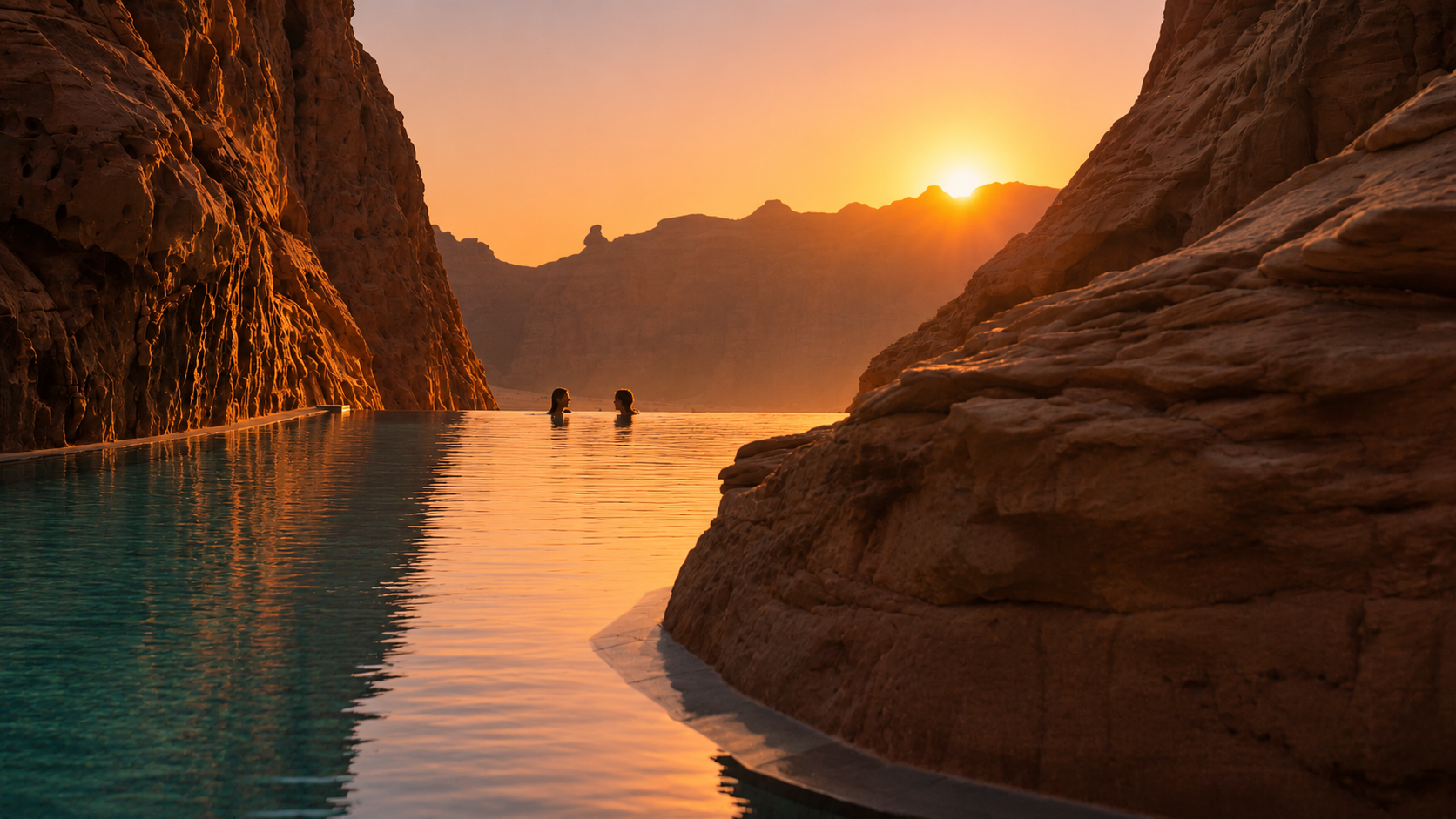
Luxury hospitality is increasingly selling the privilege of being left alone. But Arabia's architectural and social traditions suggest a richer proposition: privacy need not mean isolation. It can mean being welcomed without being exposed.
There was a time when luxury travel was largely about arriving. The grand hotel lobby, the celebrated dining room, the terrace where everyone could see who else was in town. Recognition was part of the experience, and being seen among the right people was one of the privileges money could buy.
That form of luxury has not disappeared. But another has become increasingly desirable: the freedom to withdraw from public attention. A private villa with no overlooking neighbors. A secluded entrance. Staff who know when to appear and when to leave. A holiday that produces no photographs for strangers to examine.
Research into affluent travel preferences reflects this demand. McKinsey's 2024 study of more than 5,000 luxury travelers identified privacy and exclusivity among the priorities of high-net-worth guests. More recent industry research continues to point toward demand for secluded accommodation and discreet, personalized service, although privacy is far from every luxury traveler's highest priority.
In a world where visibility has become effortless, the ability to control one's visibility carries its own value.
What makes this particularly interesting is that privacy as an expression of status is hardly new. Across the Mediterranean and Arabia, architecture and social customs have long been shaped by the desire to manage the boundary between public and private life. Two traditions offer different ways of understanding that boundary: the retreat into landscape and the protection of the threshold.
Neither belongs exclusively to one civilization. Both have existed in different forms across cultures. Yet their histories offer distinct lessons for an industry increasingly interested in selling the experience of being unseen.
The Mediterranean Tradition: The Art of Retreat
For wealthy Romans, the countryside offered relief from the obligations of urban life.
Beyond the city were villas where their owners could pursue otium, the cultivated leisure associated with reading, writing, contemplation, and conversation. The Roman writer Pliny the Younger described his coastal and Tuscan villas in letters that paid remarkable attention to their rooms, gardens, views, and relationship with the surrounding landscape.
These were not necessarily places of total solitude. Roman villas could accommodate guests, social gatherings, and the business of maintaining considerable estates. Their significance lay partly in allowing their owners to choose when to participate in public obligations and when to withdraw.
Architecture made that choice tangible.
A room could open toward a garden rather than a street. A terrace could frame a distant view. A villa's position within a landscape offered separation from the demands and distractions of the city. Distance created the conditions for a different kind of life.
That tradition continues to influence Mediterranean hospitality. It appears in the secluded coastal estate, the restored farmhouse approached by a narrow road, and the small island hotel whose appeal lies partly in the difficulty of reaching it.
Here, privacy is created through separation. The landscape becomes a protective space, allowing the guest to withdraw without necessarily abandoning comfort, beauty, or companionship.
But distance is only one way of protecting private life.
The Arabian Tradition: The Protected Threshold
In Arabia, privacy has often existed alongside an elaborate culture of hospitality.
The guest is welcomed, offered coffee, and treated with generosity. Yet the obligation to receive visitors has historically coexisted with the need to protect the household's private life.
Traditional domestic architecture reflects this balance. In many Arabian homes, the majlis serves as a reception space where guests can be welcomed without requiring access to the family's more private rooms. The arrangement allows different kinds of social interaction to take place within the same building, with boundaries established through circulation, entrances, and the organization of interior spaces.
In Historic Jeddah, the principle is visible from the street.
The roshan, a projecting wooden window screened by intricate latticework, is among the defining features of the city's traditional architecture. It filters sunlight, encourages ventilation, and reduces direct visibility into domestic interiors. Its design responds to practical environmental needs while also supporting social expectations about privacy.
The roshan does not simply separate the interior from the exterior. It allows a relationship between them. Light and air pass through, and occupants can maintain a degree of connection with the street while limiting outside views into the home.
Privacy, in this architectural tradition, does not always require physical distance. It can be established through carefully managed access and visibility.
There is an important distinction here. These domestic arrangements primarily protected households; they were not designed as commercial promises of guest confidentiality. But they reveal a principle that contemporary hospitality can reinterpret: welcome and privacy are not opposing values.
A guest may be received generously while the boundaries of private life remain respected. That is a different starting point from simply placing someone as far away from other people as possible.
Where Retreat Meets Hospitality
Along Saudi Arabia's Red Sea coast and in the historic landscapes of AlUla, contemporary hospitality developments provide opportunities to examine how these ideas might converge.
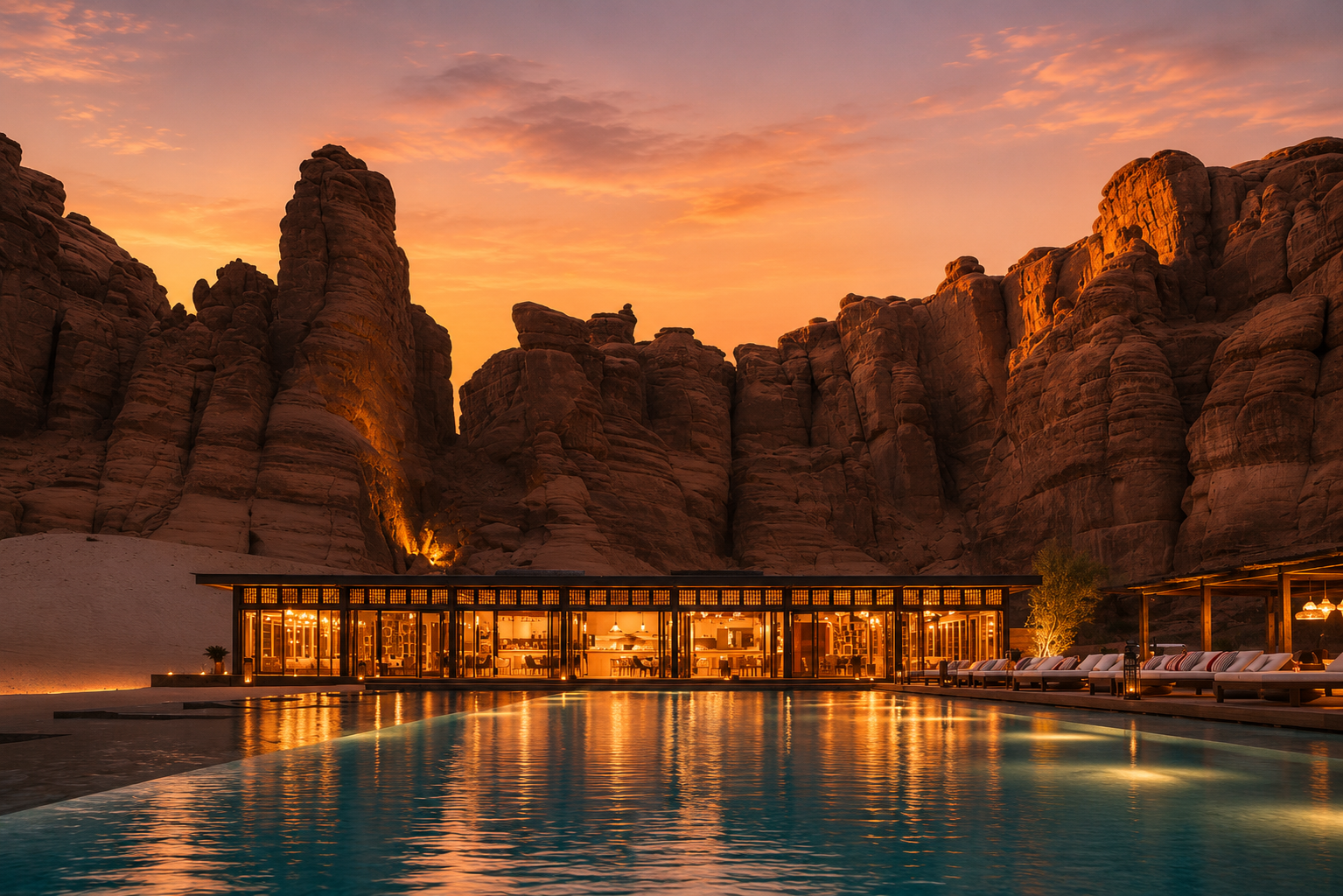
At Six Senses AMAALA, which opened in July 2026, the architecture is integrated into the terrain between the Red Sea coast and a mangrove-fringed lagoon. Its 100 suites and villas and 25 branded residences draw on elements of traditional Saudi coastal architecture. The resort's spa, sheltered between high sloping walls, is conceived as a hidden desert oasis.
The physical setting offers a sense of refuge. But the resort's own positioning also emphasizes togetherness, family gatherings, and shared wellness experiences. Its concept is therefore not simply one of isolation. It brings private accommodation and communal hospitality into a single environment.
That distinction is revealing.
A secluded location may provide distance from the outside world while the resort itself encourages connection among guests. Privacy does not necessarily mean avoiding other people. It can mean having greater control over when and how interaction takes place.
In AlUla, the relationship between privacy and place becomes more complex.
The Chedi Hegra occupies 16 existing structures within the historic landscape of Hegra, including buildings associated with the former railway. With 35 rooms, the hotel operates on a relatively intimate scale, incorporating accommodation into a setting whose cultural significance extends far beyond tourism.
Dar Tantora The House Hotel offers a different interpretation. Its 30 guest units are located within restored mud-brick buildings in AlUla's Old Town. Rather than placing guests in a conventional hotel building detached from its surroundings, the property draws much of its character from the architectural fabric of the historic settlement.
These projects demonstrate the appeal of smaller-scale hospitality and architecture closely connected to place. They do not, by room count or setting alone, establish that guests receive greater confidentiality or protection from unwanted attention.
That depends on something architecture cannot guarantee.
The true measure of hospitality privacy is not only how a property is designed, but how it behaves.
Privacy Beyond Architecture
A villa can be surrounded by walls and still fail to protect its guest's privacy.
A discreet entrance means little if arrival details are casually shared. A secluded terrace offers limited reassurance if staff photograph guests without consent. An exclusive resort may feel private while collecting extensive personal information that the guest cannot meaningfully control.
Physical seclusion and actual discretion are different privileges.
For the luxury traveler, privacy may involve several overlapping expectations.
There is spatial privacy: accommodation arranged to limit unwanted encounters, overlooking sightlines, and interruptions.
There is social privacy: the freedom to enjoy a destination without becoming an object of attention.
There is informational privacy: confidence that personal details, preferences, movements, and the fact of one's presence will be handled responsibly.
And there is service discretion: staff who understand that excellent hospitality sometimes requires restraint rather than constant attention.
These distinctions matter because modern luxury increasingly relies on personalization. Hotels remember a returning guest's preferences, anticipate requests, and use information to create the impression of effortless service.
But personalization introduces its own tension. The more a hotel knows about someone, the more carefully that knowledge must be protected.
Discretion cannot be established through interior design or marketing language alone. It requires staff training, clear confidentiality practices, appropriate data safeguards, and a culture in which privacy is respected even when no prominent guest is present.
The finest service may be remembered for what it provides. Equally important is what it chooses not to reveal.
This is where the Arabian tradition of hospitality offers a useful ethical perspective. Protecting the boundaries of another person's private life can be understood not simply as a premium service, but as an expression of respect.
The contemporary hospitality industry has the opportunity to turn that principle into consistent practice.
Who Gets to Disappear?
There is another tension in the commercialization of privacy.
Exclusive hospitality depends partly on controlling access. A limited number of rooms, private facilities, and carefully managed visitor movement can make an experience more comfortable for paying guests. In sensitive natural or heritage environments, visitor limits may also serve legitimate conservation purposes.
But exclusivity and conservation are not the same thing.
The fact that a hotel accommodates only a few dozen guests does not necessarily mean the surrounding landscape or cultural site is closed to everyone else. Hegra, for example, continues to offer publicly bookable guided tours alongside its luxury accommodation.
The more important question is how public access, heritage protection, and private commercial use are balanced.
In a destination such as AlUla, the archaeological landscape belongs to a history much larger than any hospitality project. Its value is cultural, historical, and collective. Commercial development can help support conservation and create new ways for visitors to engage with heritage, but it also introduces difficult decisions about who can enter particular spaces, on what terms, and at what cost.
A responsibly managed destination should be able to protect vulnerable sites without treating access to cultural heritage as a privilege reserved for wealthy travelers.
The distinction is particularly important in Saudi Arabia, where many destinations are being developed within landscapes of deep cultural significance.
Private hospitality should be permitted to offer genuine seclusion. That ambition need not conflict with meaningful public access, provided the two are designed and managed with equal seriousness.
Luxury becomes less convincing when the privacy of a few depends unnecessarily on excluding everyone else.
What Arabia Can Contribute
The international luxury industry has long understood the appeal of escaping the crowd. Private islands, remote villas, and secluded estates have become familiar expressions of high-end travel. Their promise is straightforward: fewer interruptions, greater personal freedom, and more control over one's surroundings.
Arabia offers an opportunity to develop that proposition in another direction.
Its architectural traditions show that privacy can be created within an active social environment, not only at a distance from it. The majlis and roshan embody different ways of managing welcome, visibility, and domestic boundaries. Their lesson is not that historic Arabian homes were luxury hotels, but that generous hospitality and carefully protected private life can coexist.
For contemporary Saudi hospitality, the opportunity is to translate that understanding into experiences that combine beauty with restraint, personal attention with discretion, and cultural openness with respect for boundaries.
A resort might offer extraordinary views and secluded accommodation. A restored historic hotel might provide a close relationship with local architecture and community. Both can distinguish themselves through service that recognizes a guest's right to determine how visible, accessible, or socially engaged they wish to be.
The deeper luxury is not always the absence of other people. It is the freedom to be among them without surrendering control over one's private life.
That is a more humane idea of privacy than seclusion alone. It does not ask the guest to hide from the world. It promises that, for as long as they are under this roof, the world will not intrude.
Sources
- McKinsey & Company. Updating perceptions about today's luxury traveler, 2024. https://www.mckinsey.com/industries/travel/our-insights/updating-perceptions-about-todays-luxury-traveler
- Phocuswright. What premium really means to indulgent travelers, April 2026. https://www.phocuswright.com/Travel-Research/Research-Updates/2026/What-premium-really-means-to-indulgent-travelers
- The Metropolitan Museum of Art. The Idea and Invention of the Villa. https://www.metmuseum.org/es/essays/the-idea-and-invention-of-the-villa
- Pliny the Younger. Letters, II.17 and V.6, descriptions of the Laurentine and Tuscan villas.
- Google Arts & Culture / Jeddah Historic District, Ministry of Culture. Historic Jeddah: An Ever Evolving Architecture. https://artsandculture.google.com/story/kQXxHrKBtyCAQw
- UNESCO World Heritage Centre. Historic Jeddah, the Gate to Makkah. https://whc.unesco.org/en/list/1361/
- IHG. Six Senses AMAALA opens between desert cliffs, lagoon waters, and the Red Sea coast, July 15, 2026. https://www.ihgplc.com/en/news-and-media/news-releases/2026/six-senses-amaala-opens-between-desert-cliffs-lagoon-waters-and-the-red-sea-coast
- Experience AlUla. The Chedi Hegra. https://www.experiencealula.com/en/hotels-and-stays/the-chedi-hegra
- Experience AlUla. Dar Tantora The House Hotel. https://www.experiencealula.com/en/hotels-and-stays/dar-tantora-the-house-hotel
- Experience AlUla. Hegra. https://www.experiencealula.com/en/places-to-go/hegra
- Semafor. AlUla aims for luxury growth, not mass tourism, October 24, 2025. https://www.semafor.com/article/10/24/2025/alula-aims-for-luxury-growth-not-mass-tourism